
.avif)
Financial considerations when comparing senior living costs
In deciding between senior living communities for yourself or your loved one, you’re likely comparing the care, services and amenities offered, which has the nicest campus and of course, the cost. But beyond the price tag, there are other financial considerations that can impact your budget and your peace of mind. Here’s what you should know about senior living costs.
How you pay senior living costs
There are actually a number of ways in which you can pay your senior living costs. These pricing options give you more control – and peace of mind – over how, when and what you can expect to pay for. This financial predictability can be invaluable! Common pricing options include:
Rental Model versus Buy-In for senior living
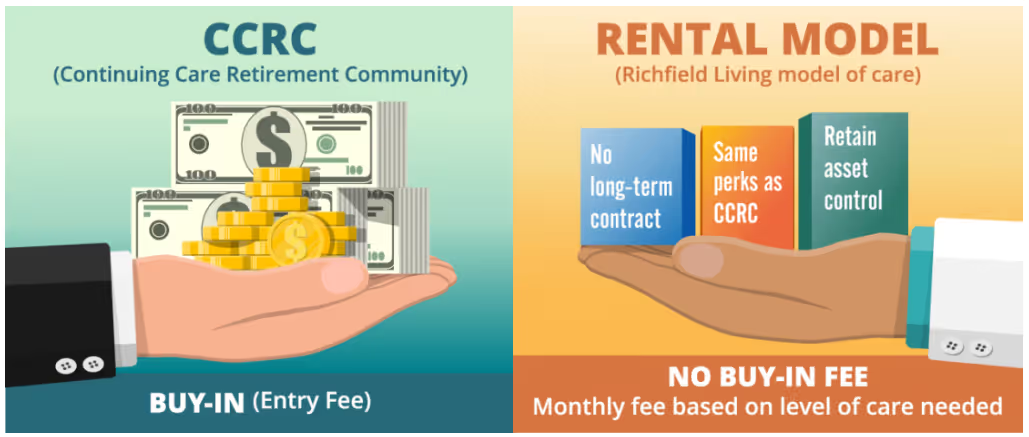
It’s important to understand that not all senior living communities that offer multiple levels of care on campus are alike. For example, those known as continuing care retirement communities (CCRC) typically require a buy-in, also known as an entry fee, in addition to your monthly cost. This upfront fee is often considered a down payment for higher levels of care that may be needed down the road, but unfortunately it can run into the six figures – a real budget buster for many of us!
On the other hand, communities like ours also feature multiple levels of care on campus but we follow a rental model. This means you pay a monthly fee based on the level of care you receive with the cost increasing as needs increase like we described above.
Beyond avoiding the upfront fee, the benefits of a rental model are that you’re not locked into a long-term contract AND you still have many of the same perks of the buy-in option and are able to retain complete control of your assets.
For example, if daily assistance currently isn’t needed but you or your loved one would like the freedom of having home upkeep, chores and cooking taken care of so there’s more time to enjoy a social, active lifestyle then you could start in independent living and pay less. All while having the peace of mind that higher levels of care are available should they be needed later. What’s more, if and when you need higher levels of care, it’s much easier as you’ll still be in familiar surroundings and will have continuity of care.
When asking about levels of care, don’t forget to consider whether the senior living communities you’re comparing charge this buy-in(entry) fee.
Nuances of Not-For-Profit Communities
Not all senior living communities are owned by hospitals, medical entities or large corporations. There are also not-for-profit senior living communities like ours which add value to your cost in a couple of impactful ways.
First, the financial investment you or your loved one makes as a resident goes right back into the community, not into shareholders’ pockets. Because of this you can have peace of mind that our profits go toward improving our care, programs and services. You can also rest assured that we’re committed to being a good steward of each family’s investment.
Next, being a not-for-profit senior living community means that we aren’t beholden to any outside entities so we can write our own story as to how we honor each resident’s financial commitment which can make a huge difference for families.
As you compare senior living communities, note which are for-profit and those who are not-for-profit.
If you’re exploring options for active, independent living in Roanoke and Salem, Virginia, we invite you to learn more about how Friendship supports vibrant, healthy aging.
Discover the possibilities at Friendship. Give us a call to see how we can help you with:
Independent Living:
Ken Mowbray- Friendship North Campus: 540.777.7103
Jennifer Hanks – Friendship Richfield Living: 540.380.6523
Assisted Living:
Beverly Able- Friendship North Campus: 540.265.2058
Ben Plunkett – Friendship Richfield Living & Friendship Salem Terrace: 540.444.0343